Mary Ward – Foundress of the Loreto Sisters
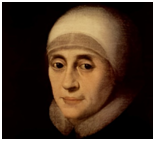
Mary Ward (1585 - 1645) was a courageous English woman whose vision transformed the future of women's education. Born during a time of religious conflict, she grew up witnessing faith, perseverance, and a deep desire for justice—all of which shaped her life’s mission. Guided by her belief that “Women in time to come will do much,” Mary Ward dedicated herself to uplifting young women through education, freedom, and personal growth.
Inspired by her strong sense of purpose, Mary Ward founded the Institute of the Blessed Virgin Mary (IBVM), known today as the Loreto Sisters. Her values of justice, sincerity, freedom, and joy continue to guide Loreto institutions around the world. She believed that education should nurture not only knowledge but also character and compassion.
Mary Ward's legacy lives on in every Loreto school, where students are encouraged to grow into confident, responsible, and service-oriented individuals. Her life remains a powerful reminder that courage and faith can create lasting change for generations.
Teresa Ball – Foundress of the Loreto Branch
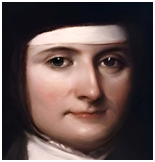
Teresa Ball (1794–1861) was an Irish pioneer whose vision brought the spirit of Mary Ward to Ireland and, eventually, to many parts of the world. After completing her religious formation at the Bar Convent in York, England—the oldest surviving convent in the country—she returned to Dublin with a deep commitment to education, faith, and service.
In 1821, she founded the Irish Branch of the Institute of the Blessed Virgin Mary in Dublin. With a strong desire to root the new foundation in the values of the Holy Family, she named the first convent “Loreto” at Rathfarnham. This name reflected her hope that simplicity, devotion, and unity would always guide the members of the Institute and the communities they served.
Under Mother Teresa Ball’s leadership, Loreto schools and convents began to flourish, eventually spreading across Ireland and to countries overseas—including India. Her dedication laid the foundation for the global Loreto education mission, shaping generations of students through values of compassion, integrity, and service.
Delphine Harte – Pioneer of Loreto in India
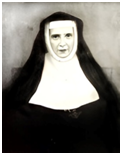
Delphine Harte played a ground-breaking role in bringing the Loreto mission to India. At just 23 years of age, she was appointed Superior of the first group of twelve Loreto Sisters who responded to the call for girls’ education in India. Her courage, leadership, and deep faith guided the young missionary community during this significant journey.
In 1841, Mother Delphine and the sisters set sail aboard the ship ‘Scotia’, embarking on a long and challenging voyage. After months at sea, they arrived in Calcutta on December 30, 1841, where they took up residence at Loreto House. Their arrival marked the beginning of a new chapter in the history of women’s education in India.
Within days, Mother Delphine Harte and her companions opened the first Loreto School in India, laying the foundation for a legacy that would transform countless lives. Her pioneering spirit continues to inspire the Loreto community, reminding us of the power of dedication, faith, and service.
Loreto Day School, Dharamtala – Our Legacy and Journey
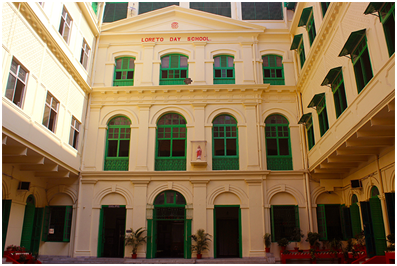
Loreto Day School, Dharamtala, established in 1879, is one of the historic pillars of the Loreto education family in Kolkata. Managed by the Loreto Sisters of the Institute of the Blessed Virgin Mary, founded in the 17th century by Mary Ward, the school stands grounded in a tradition of empowering girls through meaningful, value-based education. Set in the heart of the city, Dharamtala—meaning “Abode of Religion”—was once a prominent European settlement and has grown into a busy commercial centre. It was here that Mother Gonzaga McCarthy, along with Sr. Dympna, laid the foundation of the institution by purchasing a two-storeyed house in 1862, dedicating the ground floor to a Free School and the upper floor to fee-paying students.
Over the decades, the school expanded to meet the growing demand for quality education. In 1914, the main building was elevated to three storeys, and between 1926 and 1928, additional wings and enclosed verandahs were added to create more classrooms and learning spaces. By 1929, Loreto Dharamtala was recognized as a Secondary School, preparing students for the Senior Cambridge Examination. Today, the school is recognized by the Government of West Bengal, functions under the Anglo-Indian Board, and is affiliated to the Indian Certificate of Secondary Education (ICSE), maintaining a strong reputation for academic excellence.
Despite limited space and the absence of a playground, Loreto Dharamtala has consistently produced dedicated and accomplished students who have gone on to serve society as teachers, doctors, lawyers, journalists, and even religious sisters. The school’s educational philosophy is anchored in the values of Justice, Peace, Integrity, Freedom, and Love, ensuring that each student receives a holistic education that nurtures moral, intellectual, social, and physical development. While rooted in its Catholic identity, the school warmly welcomes pupils of all faiths.
A distinctive feature of life at Loreto Dharamtala is its strong emphasis on service and community engagement. Students actively participate in LTS, CLC, the Ecology Club, and other outreach initiatives, offering their time and support to the elderly at St. Lawrence D’Souza’s Home and engaging in various social-awareness programmes. Positioned along one of Kolkata’s busiest streets—where traffic, rallies, vendors, and constant movement are part of daily life—the school instills resilience, discipline, and adaptability in its students. Their punctuality, enthusiasm, and cheerful presence reflect the enduring spirit and strength of this vibrant Loreto institution.